Materials, labels & better sleep
Organic Mattress Labels Decoded: Materials, Certifications, and Care
“Organic” can describe a fiber, a layer, or a whole supply chain—or simply appear as an appealing word on a product page. To compare mattresses with confidence, look beyond the headline. Find out which components are certified, what a seal actually verifies, and whether the construction suits your comfort needs and care routine.
Published November 25, 2026
A mattress is not one material but a small landscape of them: a cover, comfort layers, support core, adhesives, fire-barrier components, and sometimes a quilted fill. Each layer has its own job, its own supply chain, and potentially its own certification. That is why a label reading “organic mattress” is a useful starting point, not a complete description.
For shoppers, the practical question is not whether a mattress sounds natural. It is what the claim refers to, who verified it, and whether the verified component is the one that matters to you. A certified cotton cover does not automatically make the foam beneath it organic. Natural latex is not necessarily certified organic. And a certification concerned with emissions or chemical restrictions is not the same as one that verifies organic farming.
Reading those differences takes a little patience. It can also prevent a costly mismatch: buying a mattress for a label when the more consequential details—firmness, heat, maintenance, and support—point elsewhere.
Start with the construction, not the slogan
Ask for a layer-by-layer account of the mattress. Ideally, the maker identifies the cover fabric and any quilting, each comfort layer, the support core, and the materials used to hold or finish those parts. Look for material names and proportions rather than broad phrases such as “earth-friendly,” “clean,” or “all-natural.” Those expressions may communicate a company’s positioning, but on their own they do not establish an independently verified standard.
Construction matters because different layers can carry different claims. A mattress might use organic cotton in its cover, wool in its quilt, latex in a comfort layer, and steel springs beneath. Another may combine a natural-fiber cover with synthetic foam. Neither description can be assessed accurately from a single front-page badge. The percentages, locations, and documentation are the substance of the comparison.
Materials also shape the experience of sleeping. A spring unit can affect responsiveness and movement transfer; a foam or latex layer changes pressure relief and how readily the surface contours. Wool or cotton in a quilt can contribute a different feel from a smooth stretch-knit cover. These characteristics are not guaranteed by an organic claim. They belong to the mattress’s design and should be considered separately.
What material names do—and do not—tell you
Organic cotton
Organic cotton generally refers to cotton grown under an applicable organic agricultural standard. But a mattress description may use the term for a particular component rather than for the entire product. Confirm whether it applies to the outer fabric, the full cover, a quilted layer, or another specific part. Ask whether the finished textile is covered by a certification and whether that certification addresses processing as well as the source fiber.
There is a difference between a company saying that a material is organic and showing documentation that supports the claim. A certification can offer a defined set of rules and a chain of verification; it cannot tell you whether the mattress feels comfortable, lasts well, or fits your sleep preferences.
Natural and organic latex
Latex is a material category, not a guarantee of organic status. The word “natural” may refer to latex sourced from rubber-tree sap, but blends and processing methods vary. A product described as “natural latex” should not be assumed to be made entirely from natural latex, nor should it be assumed to carry organic certification. Ask about the latex content, whether it is blended, and which layer contains it.
When a maker claims organic latex, ask which certification applies and what it covers. A certificate may relate to the latex material or its production chain rather than every component in the finished mattress. The distinction is easy to lose in a short product description, but important when comparing products.
Wool, foam, springs, and other components
Mattresses can include wool, cotton, foam, steel springs, adhesives, and fire-barrier materials in different combinations. “Natural” is not a single technical specification for all of them. Wool may be described by its source or processing; foam may be evaluated under a chemical-emissions program; steel springs may be identified by construction rather than an organic label. Request the details relevant to the particular layer instead of assuming one certification covers everything.
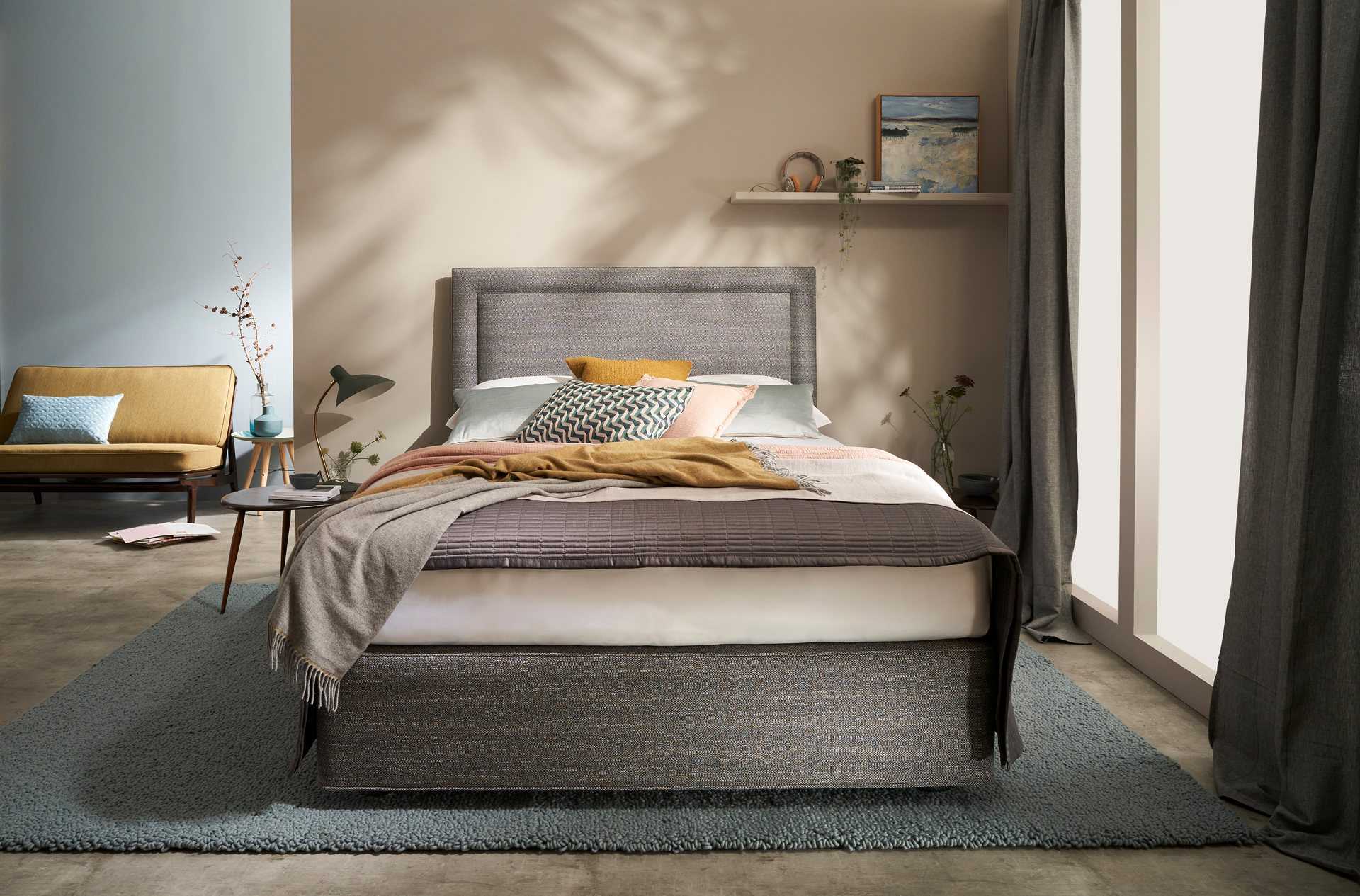
For example, the published construction details for the Vispring Coronet describe wool and viscose ticking, British fleece wool and cotton fillings, and a pocket-spring unit. Those material details help explain its construction; they should not be read as proof that every component is certified organic. The distinction illustrates a wider rule: a specific ingredient description is informative, but certification claims need their own evidence.
Certification labels: different questions, different answers
Certifications are not interchangeable. Some assess whether agricultural fibers meet organic requirements; others examine textile processing, chemical restrictions, or emissions. A mattress may carry a credible label for one purpose while leaving other questions unanswered. The key is to match the seal to the claim being made.
- GOTS: The Global Organic Textile Standard concerns organic fibers and textile processing under defined criteria. Check the certificate and product scope to see which textile components are included; a certified textile component does not automatically certify the whole mattress.
- GOLS: The Global Organic Latex Standard is associated with organic latex and requirements across relevant stages of its supply chain. Confirm that the latex in the specific product—and the layer being described—is within the certificate’s scope.
- OEKO-TEX Standard 100: This standard tests textile articles and components for certain harmful substances under its criteria. It is not an organic-farming certification. A textile can meet a substance-testing standard without being made from organic fiber.
- CertiPUR-US: This program applies to qualifying flexible polyurethane foam and addresses specified content, emissions, and durability criteria. It does not certify organic materials or a complete mattress.
- GREENGUARD Gold: This certification focuses on product emissions and indoor-air quality criteria. It does not establish that a product is organic, nor does it describe every aspect of its material sourcing.
Program rules and certificate scope matter. A badge reproduced on a product page is not the same as a current, independently verifiable certificate for the model being considered. Search the certifier’s directory when available, compare the listed business or product with the manufacturer’s claim, and note whether the certificate covers a material, a facility, a product line, or a finished item.
If a seller supplies a certificate number, ask for the certificate or a link to the certifier’s record. Check the validity dates and the exact product name. If a mattress has multiple sizes or versions, confirm that the specific construction you intend to buy is included. When the answer is vague, treat the claim as unverified rather than filling in the gaps yourself.
A practical checklist for comparing claims
Clear answers should make a mattress easier to evaluate, not require you to decode a cloud of marketing language. Use these questions when reading a label, product page, or technical sheet:
- Which exact component is described as organic: the cover, a textile filling, latex, or the complete mattress?
- What is the material composition of each layer, including any blends or synthetic components?
- Which independent certification supports each claim, and what does its scope cover?
- Can the certificate be checked through the certifier, and is it current?
- Are emissions, chemical testing, organic sourcing, and finished-product certification clearly distinguished?
- What is the mattress’s firmness, and how does its layer construction influence contouring and support?
- What care instructions apply to the cover and interior, and which actions could affect the warranty?
- What happens if the mattress feels unsuitable after delivery, and what conditions apply to the trial or return policy?
The last questions may seem outside the territory of certification, but they belong in a sound purchase decision. A verified material claim cannot substitute for a mattress that feels right, fits the bed frame, and can be maintained as recommended.
Comfort is its own evidence
Labels describe sourcing or testing; they do not predict a sleeper’s preferred firmness. Body shape, sleep position, personal comfort, and the mattress’s full construction all play a role in how a surface feels. A softer top layer may feel more cushioning, while a firmer construction may feel more stable to some sleepers. These are individual responses, not outcomes that an organic certificate can promise.
Temperature is similarly multifactorial. The cover and comfort layers matter, but so can the room, bedding, humidity, and the sleeper. Natural fibers are often promoted for breathability or moisture management, yet the performance of a finished mattress depends on how the materials are assembled. Look for construction information, read care and warranty terms, and use a trial period thoughtfully if one is offered.
For shoppers sensitive to specific materials, ingredient transparency can be especially useful. If you have a known allergy or medical concern, a broad “hypoallergenic” claim should not replace advice from a qualified health professional or a precise account of what the product contains. Certifications have defined scopes; they are not personal medical guarantees.
Care begins before the first night
Mattress care is not one universal routine. Follow the maker’s instructions for the exact model, especially when its layers include materials that should not be soaked, machine-washed, or exposed to direct heat. A removable cover may have a different cleaning process from the mattress core. A waterproof protector can help limit spills and stains, but confirm that it fits correctly and does not conflict with the maker’s guidance.
Vacuuming, spot cleaning, airing, or rotating may be recommended for some mattresses, while other models have specific restrictions. Do not assume that flipping is appropriate: many contemporary mattresses have a designated sleep side. Rotating may be permitted, but the intervals and method vary. Keep written care instructions and warranty terms together so a routine intended to help does not inadvertently void coverage.
Use a suitable foundation. The wrong base can affect support and ventilation, and may fall outside warranty requirements. Check the maker’s specifications for slat spacing, center support, adjustable-base compatibility, and weight limits. Let a mattress air out according to the manufacturer’s directions after unpacking, and ventilate the room as appropriate. These steps are practical, not a substitute for a certification claim.
How to read the fine print without losing the plot
It is tempting to treat a mattress label as a verdict: certified means good, uncertified means bad. Real decisions are less tidy. A certification can make one part of a supply chain more legible. It cannot answer every question about comfort, durability, repair, disposal, or personal fit. Nor does the absence of a particular seal prove that a mattress is unsafe or poorly made.
Instead, separate the decision into three layers. First, verify the claims that matter to you: material identity, organic status, or emissions testing. Second, assess the design: firmness, pressure relief, temperature, edge support, and movement. Third, confirm the practical terms: care, warranty, delivery, trial, and return policy. This structure keeps a compelling label from doing work it was never designed to do.
Be alert to words that sound precise but lack a defined scope. “Eco,” “green,” “clean,” and “chemical-free” are not interchangeable with a named standard and a verifiable certificate. Ask the seller to translate each claim into a specific material, rule, and product component. A trustworthy explanation should make the limits as clear as the benefits.
The bottom line
Organic mattress labels become easier to understand when the mattress is treated as a collection of materials rather than a single promise. Identify the layers. Distinguish organic sourcing from chemical testing and emissions standards. Verify certificates against the correct product and component. Then bring comfort, care, and warranty requirements into the same comparison.
The best label is not necessarily the one with the most badges. It is the one whose claims can be traced, whose limits are plainly stated, and whose underlying mattress suits the person who will sleep on it. A little scrutiny turns a badge from decoration into useful information—and leaves the final decision where it belongs: with evidence, construction, and fit.