Why space-saving beds matter
The modern bedroom is more than a place to rest; it is a multifunctional zone where study, work, dressing, and daily rituals intersect. Space-saving beds are not simply smaller; they are smarter. They use innovative mechanisms, modular platforms, and thoughtful ventilation strategies to maximize usable area and preserve comfort. Think of a bed as a platform for adaptability—a foundation for a life that can flex with changing rooms, roommates, or evolving routines.
Historically, the bed has been a central piece of home design. From the stately architectural beds of the 19th century to the modular forms that emerged in late 20th-century urban apartments, humans have long sought to reconcile rest with spatial efficiency. In the 21st century, space-saving beds have matured into reliable, clinically attentive options that balance form and function. The result is a repertoire of solutions—Murphy beds, sofa beds, platform beds with integrated storage, and compact adjustable bases—that empower choices without forcing compromises on sleep.
Core space-saving bed types
Each bed type offers distinct advantages depending on room dimensions, routine, and personal preferences. Below is a practical taxonomy to anchor your decision-making.
-
Murphy beds: A proven space saver that folds into a wall or cabinet, freeing floor space during the day. Modern variants often integrate with desks or dressers, and some models include gas pistons or manual mechanisms to ensure smooth operation and durable use.
-
Sofa beds and futons: Dual-function pieces that transform into a sleeping surface at night. They’re ideal for living rooms or studios where dual-purpose use dominates. Look for high-resilience foams, zoned support, and easy conversion systems to minimize daytime clutter.
-
Platform beds with built-in storage: A contemporary answer to clutter, these beds raise sleep surfaces above drawers, cubbies, or hidden compartments. They maximize under-bed storage without sacrificing support, airflow, or ease of access.
-
Compact adjustable bases: The latest generation of adjustable frames emphasizes independent head and foot movements, along with smart lighting and USB ports. These bases can be paired with a range of mattresses and frames to deliver personalized comfort in limited spaces.
Key criteria for evaluating space-saving beds
Selecting the right bed hinges on a handful of practical criteria. Here is a concise checklist you can use when comparing options:
- Mattress type and compatibility: The choice of mattress affects ventilation, durability, and how well the bed aligns with your sleep posture. Consider latex or other breathable foams for temperature control in compact spaces.
- Ventilation and airflow: A compact sleep surface should permit steady air exchange to prevent heat buildup. Look for bed designs that favor open gaps, breathable fabrics, and thoughtful alignment with room vents or windows.
- Ease of use and reliability: A space-saving bed must be straightforward to deploy or collapse without requiring a team of helpers. Mechanical reliability, smooth hinges, and accessible mechanisms matter in daily life.
- Weight and installation: Lighter modules ease assembly, but heavier, sturdier builds tend to endure longer. Consider room layout, doorway width, and ceiling height when choosing a model with a folding or lifting mechanism.
- Maintenance and durability: Removable covers, washable fabrics, and modular components simplify upkeep—an essential factor in rooms that host more than one purpose.
Ergonomics and sleep health in compact rooms
It is not enough to fit a bed into a small room; the bed must support a healthy sleeping posture. Ergonomics—spinal alignment, neck support, and pressure distribution—remains central even as space constraints intensify. In smaller rooms, the bed interacts with other furniture and the room’s geometry, influencing sleep quality as much as the mattress itself.
The science of sleep emphasizes consistent alignment from head to toe. When choosing a space-saving bed, consider how the frame, mattress, and pillow ecosystem work in harmony. For example, a wall-mounted Murphy bed may require precise wall anchoring and ventilation planning to ensure that sleep remains uninterrupted and comfortable throughout the night.
Case studies: real-world space-saving in action
Across urban homes and micro-apartments, the best layouts combine intelligent bed choices with room-aware storage and flexible living zones. Here are representative scenarios:
- Studio apartment with a Murphy bed: The bed folds away to reveal a compact desk and seating area, turning the space between sleeping and working into a fluid transition. Ventilation remains key, so choose a mechanism with good clearance and breathable bedding options.
- Small bedroom with platform storage: A platform bed with drawers or pull-out bins beneath creates a tidy footprint and reduces the need for standalone dressers, freeing floor space for a small desk or reading nook.
- Multi-use guest room: A sofa bed paired with a slim, modular wardrobe system allows daily living to occur in a single room while offering a soft, comforting bed at night.
Product spotlight: The Clean Bedroom Level 3 Adjustable Bed Base
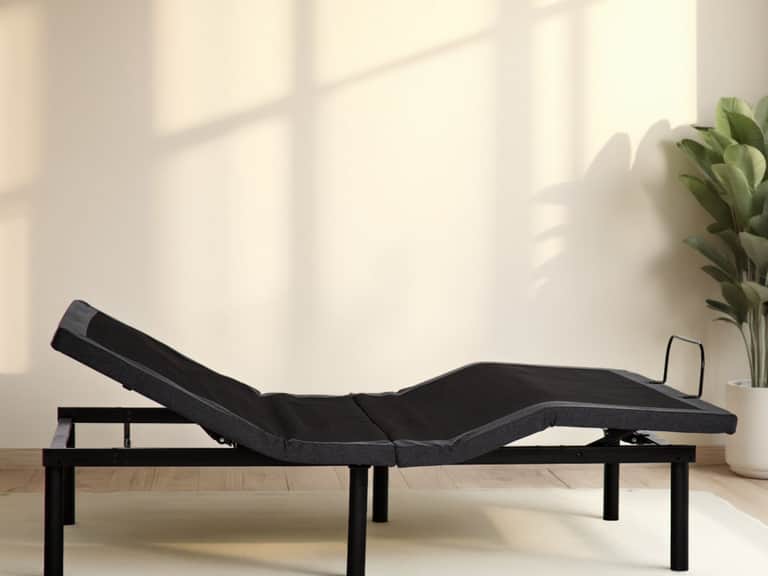
In a landscape of ever-evolving sleep technology, the The Clean Bedroom Level 3 Adjustable Bed Base represents a notable synthesis of form, function, and quiet luxury. This base provides independent head and foot lifting, head tilt for reading or watching, and dual massage options that can ease tension after a long day. It does so with a discreet footprint and under-bed lighting that enhances nighttime safety and ambiance without intruding on space.
Its height adjustability from 2" to 13" gives room flexibility—an essential feature when pairing with platform frames or pedestals and integrating with storage or seating arrangements. The wireless remote with presets and memory options simplifies nightly routines, reducing friction in the bedtime ritual.
Note: Image depicts the product in a contemporary bedroom setting.
Practical checklist for your space
- Measure the room’s usable area and doorways carefully before selecting a bed type to avoid awkward fits.
- Assess ventilation options—avoid obstructing vents and consider a breathable mattress cover to support airflow in compact spaces.
- Prioritize convertibility. In small rooms, a bed that doubles as a storage unit or a desk can dramatically improve daily life.
- Consider noise and motion isolation, especially for shared walls or thin doors. Solid frames and high-quality mechanisms minimize disturbances.
- Plan the layout to maintain a calm, sleep-conducive environment: keep electronics out of the bed zone and use soft, breathable textiles.
Final thoughts: designing a better night’s rest in tight spaces
Space-saving beds are not a compromise but a philosophy—one that respects both the science of sleep and the art of living well in compact environments. By choosing the right bed type, ensuring proper ventilation, and maintaining a deliberate approach to room layout, you can transform even the smallest room into a sanctuary of rest and productivity.
As designers, homeowners, and renters navigate cities that demand efficiency, beds that adapt to the room become a cornerstone of everyday life. The goal is not merely to save space but to elevate the experience of sleep, creating a room that welcomes rest, work, and recreation with equal ease.
A historical glance: three key individuals shaping sleep, space, and design
The evolution of beds and sleeping environments has been guided by visionaries across eras. Three figures stand out for their influence on how we think about space, comfort, and ergonomic design.
-
Henry Cole (19th century): As a promoter of modern retail and public institutions, Cole’s era helped redefine how households acquired furniture and how spaces were organized. The shift toward standardized bedroom furniture and the emergence of catalog-based shopping pushed the idea that bedrooms could be both functional and compact when designed intelligently.
-
Philip Staby (early 20th century): An innovator in modular furniture concepts, Staby explored how rooms could be reconfigured with multi-purpose pieces. His work laid groundwork for space-saving beds that could be folded away or repurposed—long before the term “Murphy bed” became common.
-
Modern ergonomics pioneers (late 20th to 21st century): Sleep scientists and designers such as researchers and engineers in the field of ergonomic bedding have integrated airflow, material science, and biomechanics to create beds that support healthy sleep in constrained rooms. Their collective work underpins today’s emphasis on breathable materials, adaptive bases, and intelligent storage within bed frames.
Conclusion: toward a calmer, more navigable nocturnal space
The Vacuumpacked Bed era invites a practical, design-minded approach to sleep. By selecting space-saving beds that balance mattress type, ventilation, ease of use, and durability, readers can craft rooms that feel larger, lighter, and more inviting. The journey from cluttered corner to restful retreat begins with a clear plan, careful measurements, and a curated set of bed choices that honor both form and function.
The future of compact sleep is not just about shrinking objects but about expanding possibilities. A well-chosen bed can unlock new layouts, introduce storage without sacrificing air, and support healthier sleep patterns that power every other part of life.